

Patti Smith "Devotion": why we write when we can’t simply live
A raw, intimate reading experience of Patti Smith’s small but seismic book, from the writer’s body to the story’s pulse

There are books that feel less like reading and more like entering someone’s bloodstream. Devotion was that for me, a slim book with the density of a meteorite. I carried it everywhere: in my tote bag, under my arm, on top of my grocery list. It became a companion, a witness, a small weight I wanted to feel against my body.
Patti Smith has always done this to me. She makes me want to hold things.
Words. Objects. Moments. Myself.
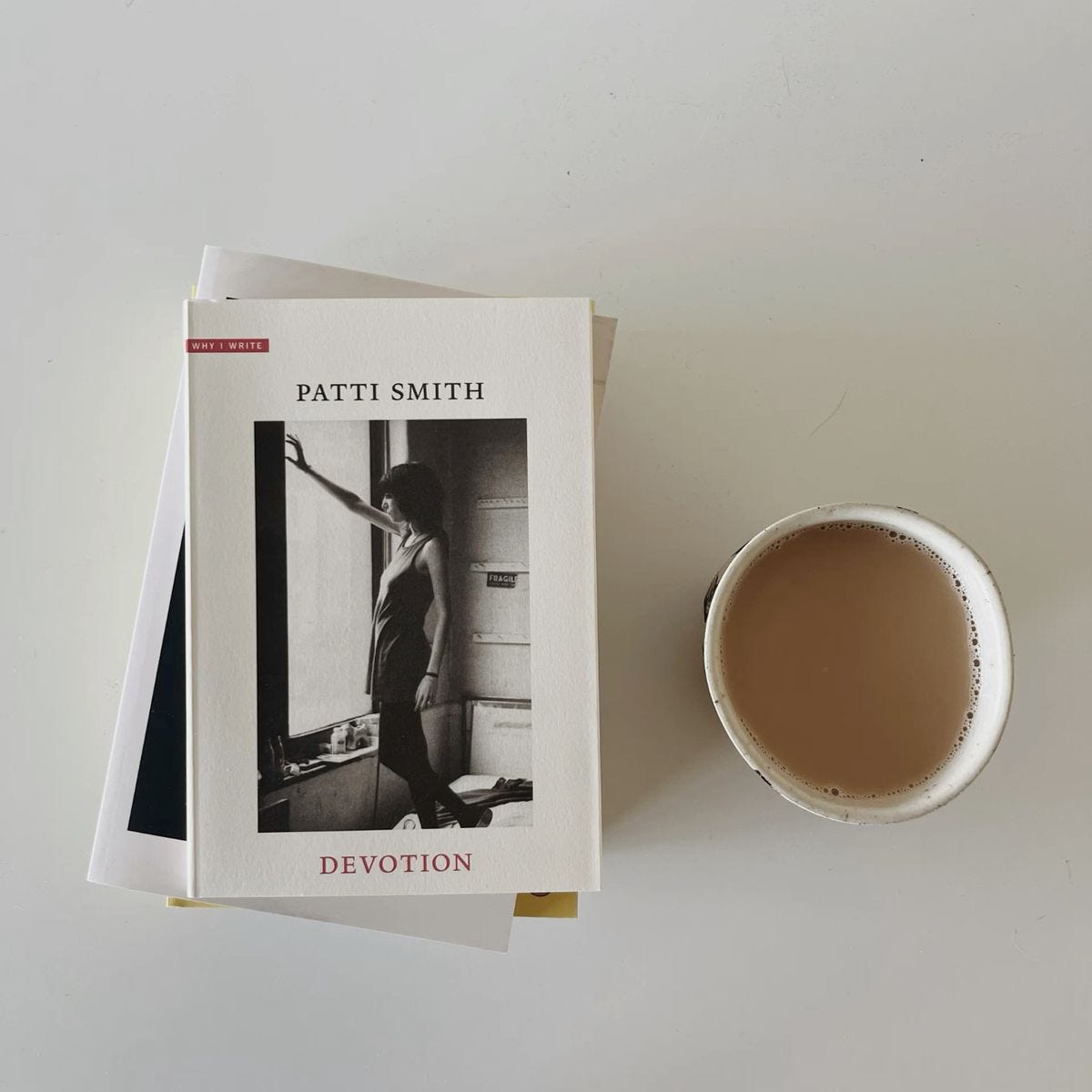
The experience of reading her
Reading Devotion felt like being allowed into the backstage of her mind, not the curated, mythologized Patti Smith, but the one who sits in cafés with cold coffee, who watches people with a kind of reverent hunger, who writes because she can’t not write.
Her voice is both wandering and precise. She moves from Paris streets to train rides to a figure skater slicing through ice, and somehow it all feels connected. She writes with the kind of attention that makes the world feel newly lit.
One line stopped me in my tracks:
“Why do we write? A chorus erupts. Because we cannot simply live.”
That’s the closest thing to an answer I’ve ever believed.

The story inside the story
Devotion is part memoir, part travelogue, part fiction, but none of those labels matter. What matters is the permeability. She lets the real world bleed into the imagined one, and the imagined world bleed back into her.
There’s a moment where she watches a young skater practicing alone, and the way she describes it, the discipline, the devotion, the loneliness, becomes the seed of the fictional story she writes later in the book. It’s a reminder that writing doesn’t come from inspiration; it comes from attention.
“The writer is a conductor of the soul.”
She doesn’t say this to sound mystical. She says it because she knows writing is a form of listening, to the world, to memory, to the things that haunt us.
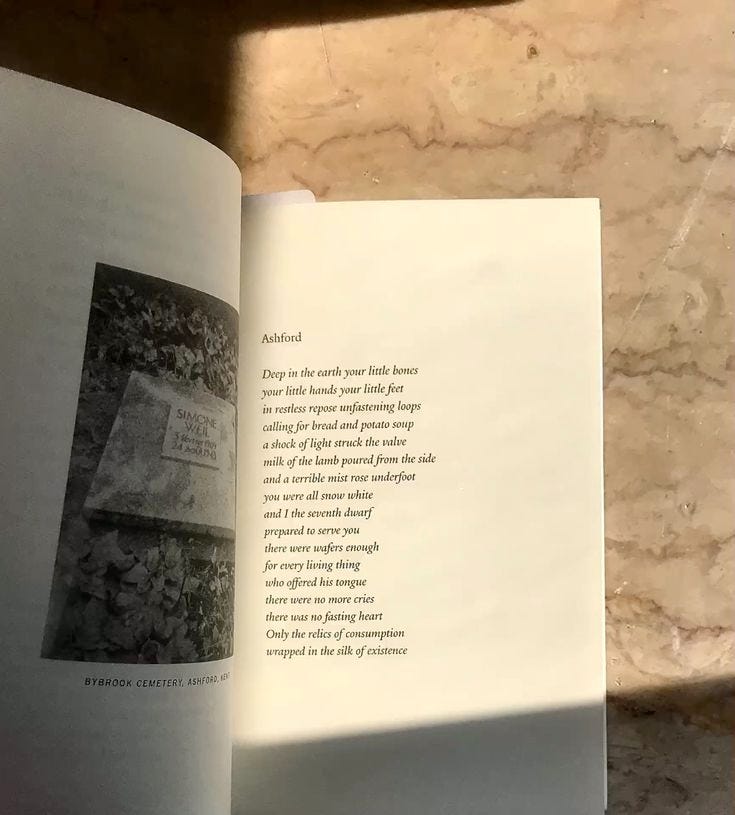
The physicality of it
I kept taking photos of the book without meaning to.
The spine softening.
The pages bending.
The cover catching the light on my kitchen table.
Not for aesthetics, for memory.
Because Patti writes with her whole body, and the book carries that energy.
It feels lived-in even when it’s new.
Her writing is tactile. You can feel the cold of the Paris morning, the roughness of a café table, the ache of wanting to create something that matters. She makes the act of writing feel physical, almost muscular.

Why She Writes, And Why I Read Her
Patti Smith writes because she is compelled. Because the world overwhelms her. Because she is porous. Because she is devoted — not to perfection, but to presence.
“To write is to enter the pulse of the day.”
That line felt like someone tapping my sternum.
Reading Devotion reminded me that writing doesn’t need to be justified. It doesn’t need to be polished. It doesn’t need to be anything other than true. Patti writes like someone who has made peace with the fact that she will never stop paying attention.
And maybe that’s the real lesson of this book:
We write because something inside us refuses silence.
We write because the world is too much to hold alone.
We write because it’s the only way to stay awake.
Have you read this book?
Or any of her books?
With love,
R&R
🖤 Join our community
The Inner Riot is for those who refuse to live on autopilot, the ones who want to feel more, think deeper, and move through the world with intention.
If you’ve ever felt that quiet ache for something deeper, this will feel like home.